
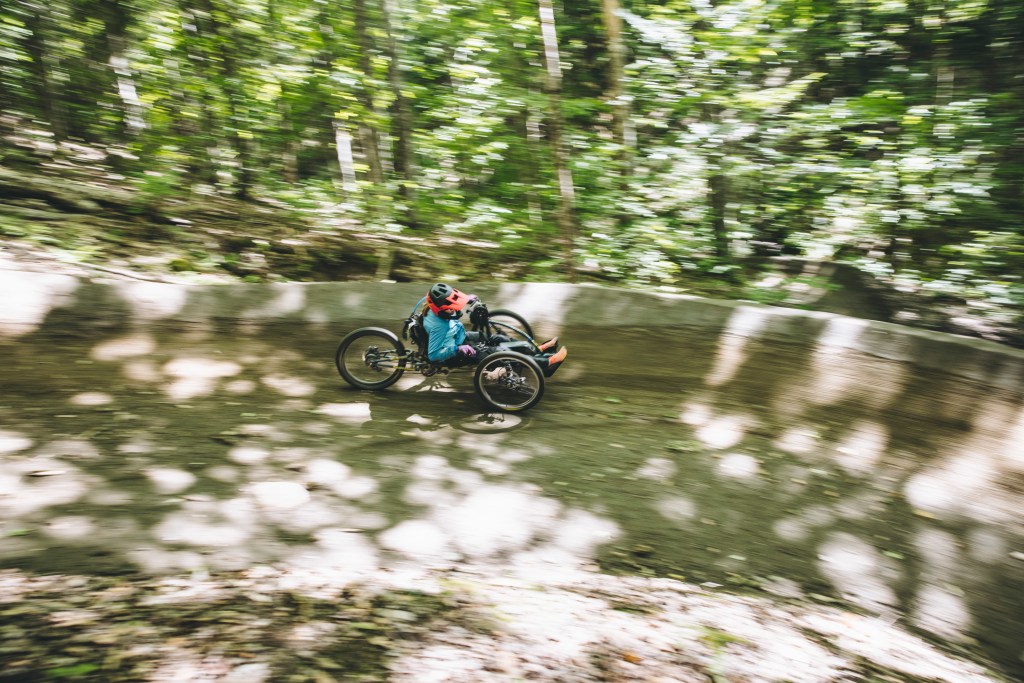

What is Adaptive Riding?
Adaptive Mountain Biking (aMTB) encompasses a broad range of events and riders who typically cannot ride a standard mountain bike and require adapted equipment and/or trails to suit their physical, intellectual, neurological and sensory abilities. (Definition courtesy of Break the Boundary)
How Does An Adaptive Mountain Bike Work?
There are a variety of adaptive mountain bikes available, each designed to meet different needs and often customized to suit individual riders’ abilities. Adaptive equipment you’re likely to see out on the trail include hand-cycles (both seated and kneeling), recumbent foot pedled cycles, bucket bikes, and tandem bikes.
Many aMTBs also possess a small electric motor, either pedal assist or throttle, to help expand the terrain they can access. These bikes are also considered electronic mountain bikes (eMTBs) – visit our dedicated page to learn more about eMTBs.
Some aMTB riders may ride a two wheel standard bike and use adaptations such as magnet pedals, brake/shifting adjustments, etc such as individuals with intellectual disabilities, amputees, etc.
Adaptive Riding with Elevate
Adaptive riders at Elevate will select sessions designed around aMTB participation, indicated in the course titles as aMTB. We welcome women and gender-expansive riders of all abilities from never ridden an aMTB to seasoned riders to those new to their injuries. Together, Elevate staff and Vermont Adaptive Ski and Sports will work to set you up with the necessary gear, volunteer instructor and coaching support to participate in the skill clinics and group rides you select. Off-bike programming will take place in accessible spaces. If you have questions or concerns, please reach out to Kristin with Elevate or Felicia with Vermont Adaptive.
To learn more about how Vermont Adaptive Ski and Sport supports athletes or the ways Vermont Mountain Bike Association (VMBA) is working to expand trail access and opportunity for adaptive riding, please visit our websites.
 Elevate Mountain Bike Festival